How to Choose the Right Cordless Laser Level?
Whether it’s hanging pictures during home DIY projects or professional wall alignment and outdoor site layout, precise leveling and alignment are crucial for achieving high-quality results. Traditional spirit levels are cumbersome and prone to errors, while cordless laser levels, with their wireless freedom and precise efficiency, have become the preferred tool in modern applications.
However, the market is flooded with various models, with red and green lasers and numerous parameters that can be overwhelming. This article will break down the core purchasing logic for cordless laser levels, helping both beginners and professionals choose a cost-effective model!
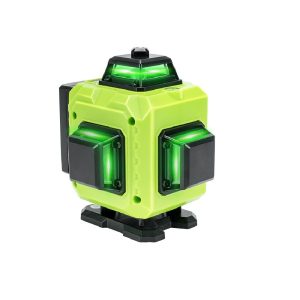
What is a Cordless Laser Level?
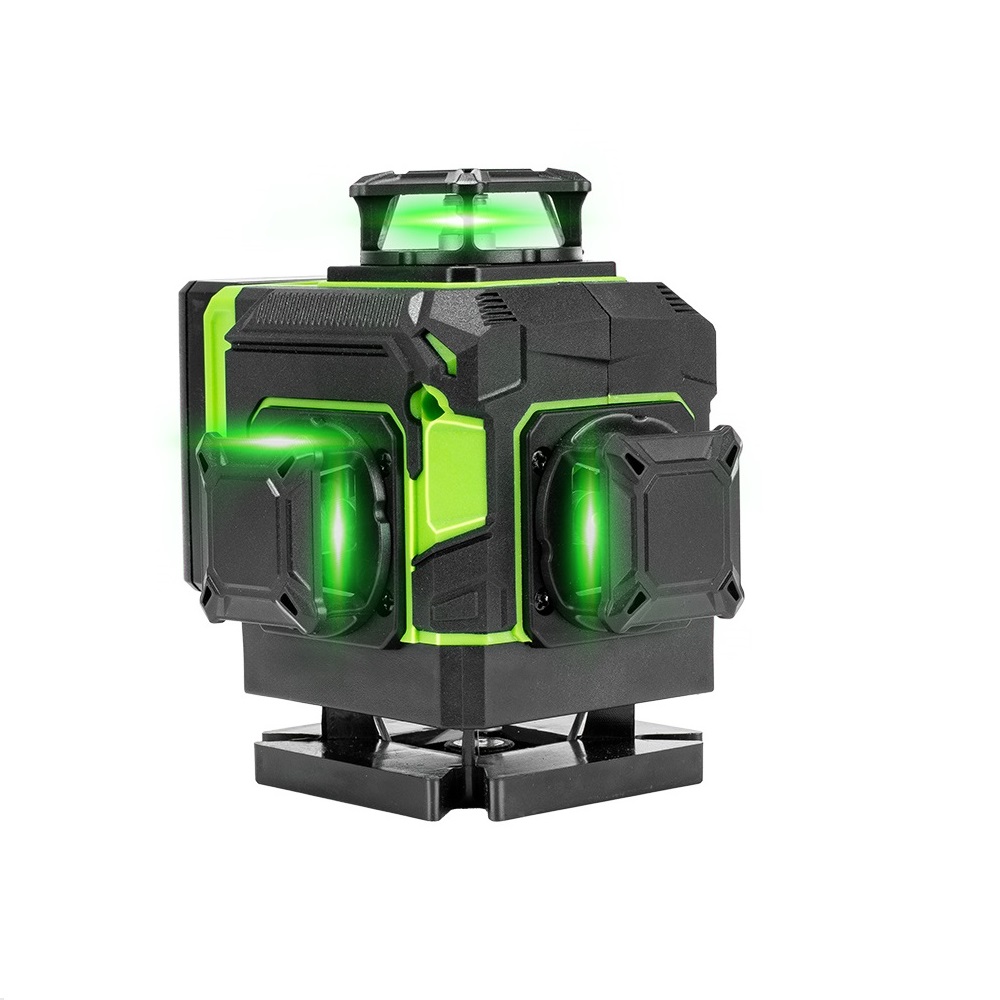
A cordless laser leveler is a precise measuring tool that is free from power cords and powered by a rechargeable lithium battery. Its core principle is to project horizontal, vertical, or 360° surrounding laser lines using a built-in laser emitter, combined with an automatic leveling system, providing a visual and precise reference baseline for decoration, construction, DIY, and other applications.
Types of Laser Levels
The classification of laser levels primarily revolves around the laser output form. Different types correspond to different work scenarios, from home DIY to professional engineering.
Cross-Line Laser Level
This type of laser level projects mutually perpendicular horizontal and vertical laser lines. It is easy to operate and highly visual, requiring no complex adjustments, making it suitable for simple tasks such as home DIY.
Rotary Laser Level
This type of laser leveling tool uses a high-speed rotating laser beam to form a 360° horizontal/vertical reference plane. It has a long range and wide coverage, but requires the use of a laser detector.
Combination Laser Level
Combination laser levels offer more functions, integrating cross-line, rotary, and point functions. The projection mode can be switched according to work requirements, making it suitable for complex work scenarios.
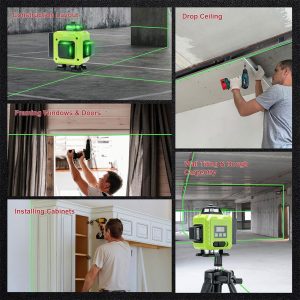
Green Laser Level vs. Red Laser Level
Green Laser Level
Green laser line levelers are generally perform better overall, with higher brightness, better visibility, and higher efficiency, making them the preferred choice for most professional and frequent use scenarios. They are clearly visible in bright indoor and outdoor strong light conditions, significantly reducing the time spent on repeated checks, and are particularly suitable for tasks requiring high precision and visibility, such as whole-house renovation and outdoor layout.
Red Laser Level
Red laser line levelers are more suitable for users with limited budgets or occasional use. They are cheaper, have lower power consumption, and a simpler structure, making them suitable for light indoor DIY tasks such as hanging pictures. However, this also means they have poor visibility in strong light and outdoor environments, a shorter range, and lower work efficiency, making them less suitable for professional outdoor and large-area construction scenarios.
Factors to Consider When Choosing a Laser Level
When choosing a leveling laser, the key is to match the model and parameters to your usage scenario, avoiding blindly pursuing high specifications or being confused by complex parameters.
Usage Scenario
The first step in choosing a line laser tool is to clarify the environment in which you will be using it. Indoor DIY projects don’t require high brightness or range; interior decoration requires more stable accuracy and a clearer laser line; while outdoor engineering requires a professional laser level with strong visibility in bright light and a long range.
Accuracy
Common accuracy ranges from ±0.2mm/m to ±0.5mm/m. The smaller the value, the higher the accuracy. For general DIY, ±0.3mm/m is sufficient, while professional construction work requires ±0.2mm/m or higher.
Range and Visibility
For indoor use, 15–50 feet is usually sufficient; large indoor areas or outdoor work require a longer range. For outdoor work, you also need to consider whether to use a laser detector.
Automatic Leveling Function
Automatic leveling significantly saves time and reduces errors, and is an essential feature for most users. You can choose a model with an out-of-range alarm, which will promptly remind you if the device is not level, preventing errors.
Choosing the Right Laser Type
Choose a cross-line, 360° line, or point laser leveling device based on your work needs. Cross-line lasers are suitable for most indoor scenarios; 360° line lasers are suitable for whole-house renovations.
Battery Life
Cordless laser leveling tools rely on battery power, so battery life is very important. You need to check the battery life in working mode, not standby time. Users who use the device frequently are advised to choose a model with a long battery life and prepare rechargeable spare batteries.
Durability and Protection Rating
If you are a professional construction worker and work in complex environments, it is recommended to choose a protection rating of IP54 or higher, with a drop-resistant structure and a lockable pendulum function, to easily adapt to your construction needs.
Mounting Options and Accessories
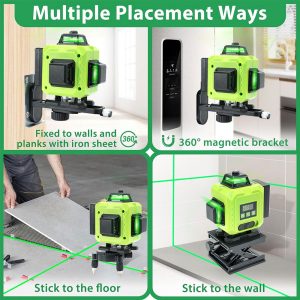
When choosing a laser line level, you also need to confirm whether it supports tripods, wall mounts, etc. These accessories can greatly facilitate your work and help you easily solve problems encountered during work.
The key to choosing a laser level is matching the appropriate laser color, accuracy, and features to your specific application. Considering battery life and durability will help you select the right model. Whether for home DIY projects or professional construction, focusing on these core aspects will lead to more accurate measurements and more efficient work.
As a professional manufacturer of cordless lithium-ion power tools, MVM offers laser alignment tool covering a wide range of line counts and applications. If you have any laser level purchasing or OEM needs, please feel interested to contact us for professional inquiries and services.