Chainsaw vs Pole Saw
Maintaining a beautiful and healthy garden requires regular pruning of overgrown branches and tall trees, and having the right tools is the key to efficient and safe operation. When it comes to tree pruning, two tools are most commonly used: the chainsaw and the pole saw. Many homeowners often confuse these two tools, thinking they can be used interchangeably, but in fact, their core functions and safety standards are completely different.
The pole saw is a specialized tool designed for high-altitude pruning, with its extended pole design allowing you to trim branches above shoulder height without climbing ladders or risking safety. In contrast, the chainsaw is more suitable for ground-level cutting tasks. This article will take safety first as the core, detail the differences between the chainsaw and the pole saw, and teach you how to choose and use these two tools correctly to make your garden pruning safer and more efficient.
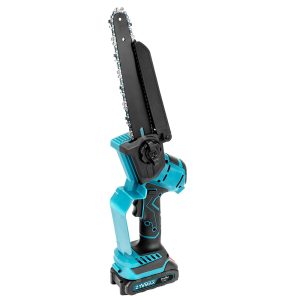
What is Pole Saw
A pole saw is a practical gardening cutting tool featured with an extra long extendable shaft and a small chainsaw head installed at the top. Different from ordinary handheld chainsaws, its biggest design highlight lies in the lengthened pole body. With the help of the long pole, you can stand steadily on the ground to finish trimming tall branches far away, without climbing ladders, standing on high places or taking dangerous heights.
It is specially developed to solve the pruning trouble of high branches, and greatly reduces the hidden dangers in tree maintenance work. Simple in structure and easy to control, pole saw focuses on high-altitude trimming work, and is widely used in daily home garden maintenance, roadside tree trimming and other scenes.
Cutting Capacity
Pole Saw
In terms of cutting performance, most household and light-duty pole saws are built with relatively compact guide bars, this compact design is not a weakness, but a deliberate optimization for its core positioning, high-altitude fine pruning. Unlike chainsaws that pursue brute force, pole saws focus on smooth and precise cutting, which is perfectly engineered to cut medium and thin tree branches smoothly without damaging the remaining branches or the main trunk of the tree.
Generally speaking, a standard household pole saw can effortlessly handle branches with a diameter up to 15 centimeters, which is more than enough to meet the daily pruning needs of most home gardens, such as trimming overgrown branches of fruit trees, ornamental trees, and shrubs. For professional-grade pole saws with larger guide bars and stronger power, making them suitable for light commercial landscaping work.
This makes it ideal for shaping tree outlines, tidying up scattered overhead branches, and trimming branches around power lines or buildings where high precision is required. In addition, the cutting speed of pole saws is relatively moderate, which can avoid excessive damage to the tree and help the tree recover quickly after pruning.
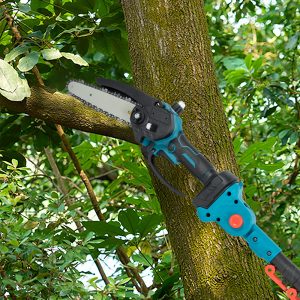
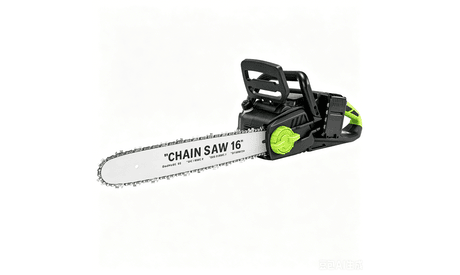
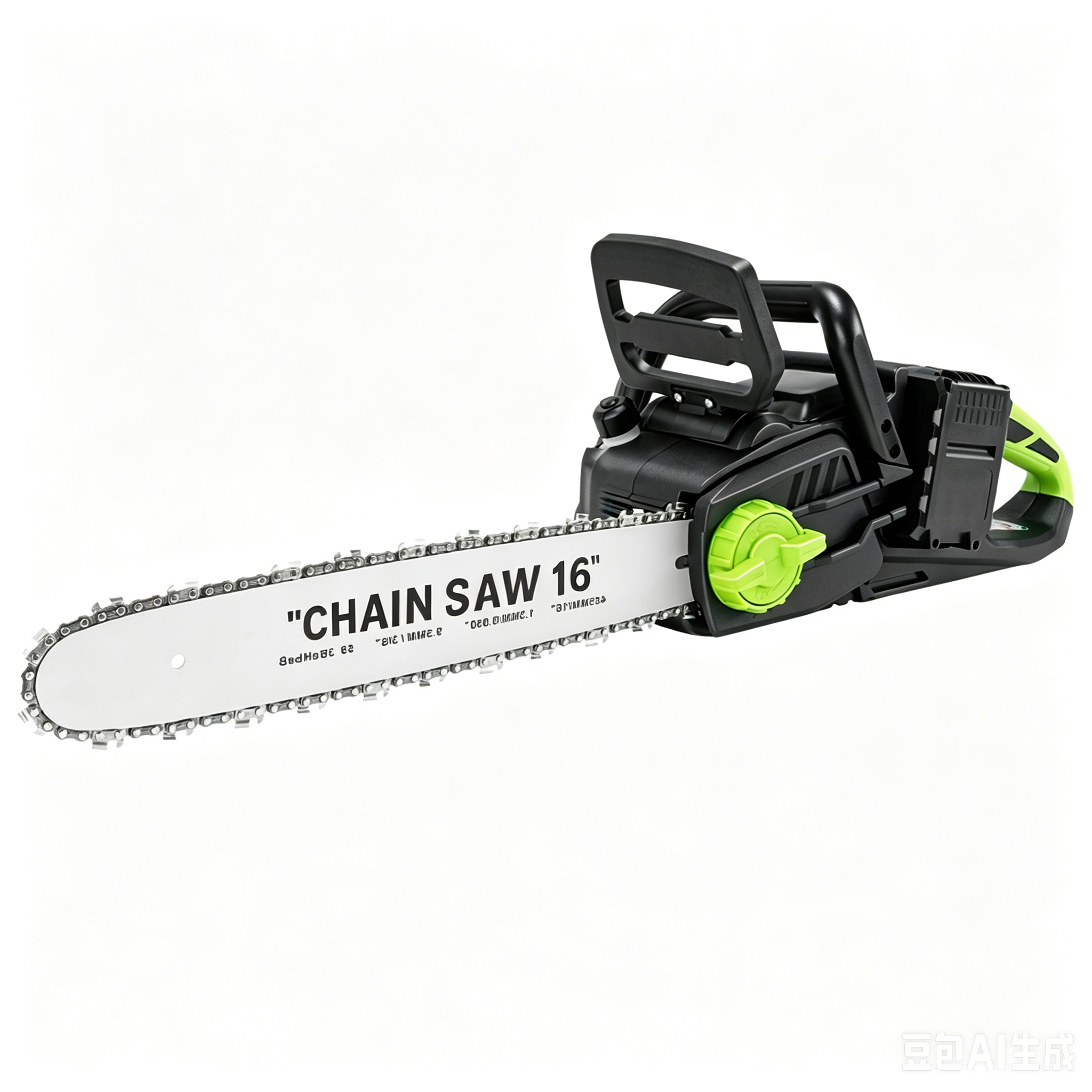
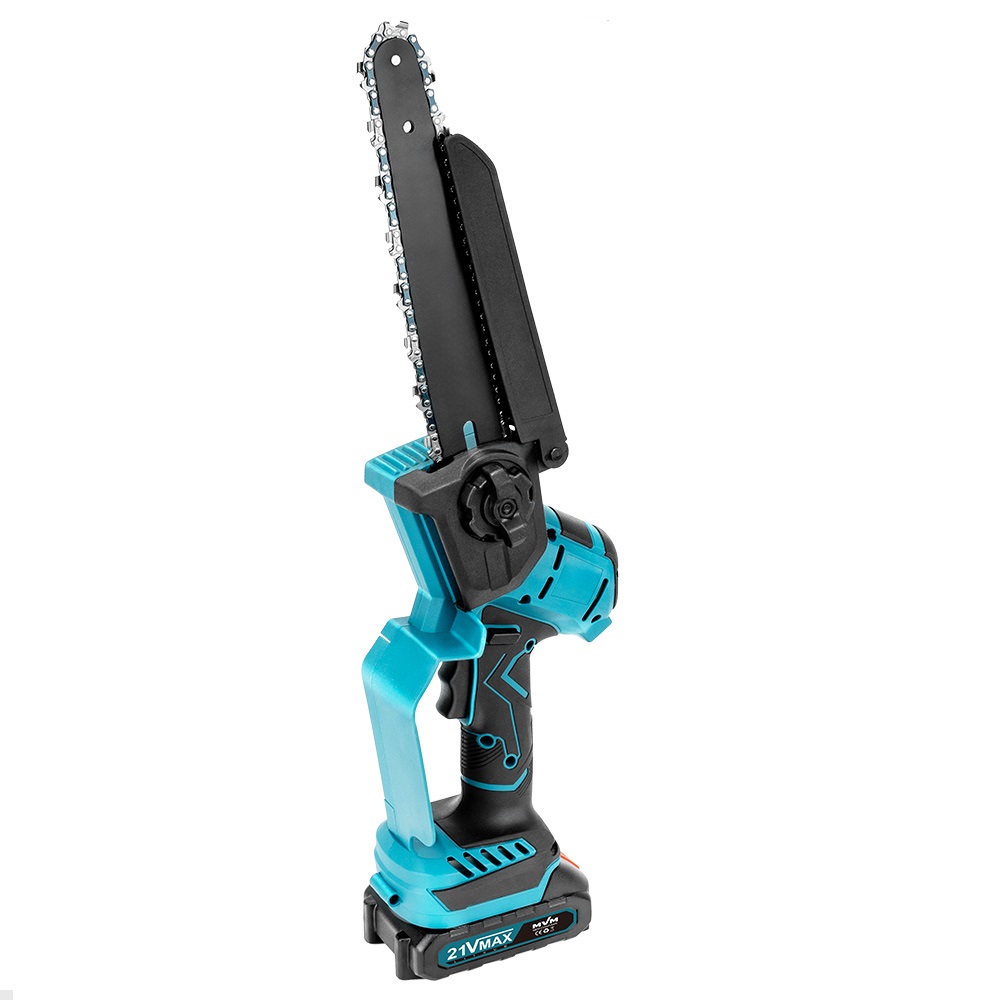
Cordless Chainsaw
Compared with pole saw, electric and fuel-powered chainsaws come with diversified guide bar sizes, ranging from 4 inches for household models to 12 inches or even longer for professional models. This wide range of specifications allows chainsaws to adapt to different cutting needs, and their overall cutting power is much stronger than that of pole saws. Unlike pole saws that are limited by the long pole and focus on high-altitude fine work, chainsaws are well-suited for close-range cutting work in narrow spaces, and can exert their powerful cutting performance to the maximum.
In addition, chainsaw have better adaptability to different wood types. Whether it is soft wood or hard wood, cordless chainsaw can complete cutting tasks stably. Some professional chainsaws are also equipped with adjustable cutting speed and anti-kickback devices, which not only improve cutting efficiency, but also enhance the safety of heavy cutting work. It is worth noting that if you are pruning high branches for an extended period, it may lead to muscle soreness, which would increase the risk of the chainsaw becoming unstable and falling.
The two tools have clear division of labor in cutting capacity, and neither can replace the other. Only by using them according to their positioning can we achieve safe, efficient and high-quality garden pruning results.
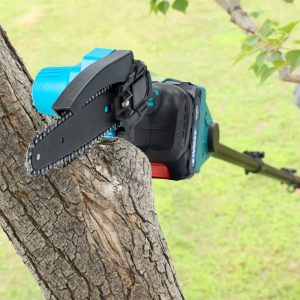
How to Use Pole Saw
Using a electric pole saw correctly not only improves trimming efficiency, but also greatly reduces potential safety risks during operation. Mastering standard operating steps is essential for every gardener and landscape worker.
Pre-use Preparation
Before starting work, you need to fully check the whole machine condition. First confirm whether the pole rod is firmly locked and adjusted to a proper working length, avoid loose pole body affecting cutting stability. Then inspect the tightness and sharpness of the saw chain, make sure there is no abrasion or damage on the chain and guide bar.
Besides, you should wear complete protective gear in advance, including safety helmet with earmuffs, anti-cut trousers and non-slip work gloves. Clear away obstacles under the tree in advance, mark the falling direction of branches, and ensure the operation area is empty of people.
Standard Operating Steps
Stand steadily on flat ground, hold the front and rear grips of the pole saw firmly with both hands, keep your body in a stable standing posture, do not lean forward excessively or stand on unstable objects. Aim the cutting head accurately at the position that needs pruning, keep the saw chain close to the lower side of the branch, start the machine steadily and cut slowly from bottom to top. Do not use brute force to press the pole saw forcibly, let the chain cut wood naturally by its own power.
When cutting large branches, it is recommended to cut in sections step by step, avoid one-time cutting too deep to prevent branches from sudden breaking and splashing, which may cause safety accidents
Post-operation Maintenance
After finishing all trimming work, you should turn off the power first and wait for the saw chain to stop completely. Clean up sawdust, leaves and dirt stuck on the guide bar, chain and telescopic pole in time. And retract the extended pole to the shortest state, place the pole saw in a dry and ventilated place for storage, keep it away from humid environment, which can effectively extend the service life of the whole tool.
How to Choose the Saw Correctly
If you mainly need to trim tall branches above shoulder height around your house, garden or orchard, pole saw is your ideal choice. It saves you the trouble of climbing ladders and greatly lowers working risks. Or if you often need to cut thick trunks, split firewood or fell medium-sized trees on flat ground, you must pick a professional chainsaw. It owns stronger power and larger cutting range to handle heavy cutting tasks efficiently.