Snow Blower vs Snow Thrower
In winter, you often need to regularly clear snow around your home. Choosing the right tool is often the most troublesome part of snow removal – especially since the terms snow blower and snow thrower are often used interchangeably, making it easy to choose the wrong equipment. More importantly, many people confuse snow blower vs snow thrower, further exacerbating the selection dilemma.
This guide will clearly define the core features of these two tools, break down their key differences, and explain the important factors to consider when choosing one, helping you accurately match your snow removal needs, select the right tool, remove snow efficiently, and avoid unnecessary trouble and waste.
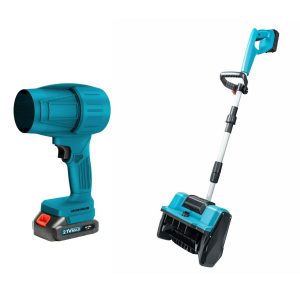
What is Snow Blower?
A snow blower is a rechargeable lithium-ion battery-powered tool that uses high-speed airflow to remove snow. It lacks mechanical parts like augers or snow shovels, making it a lightweight snow removal device that operates purely on wind power.
It uses a motor to generate strong winds that directly blow away thin layers of snow from roads and vehicle surfaces. Its compact design and flexible operation make it ideal for clearing dry snow, thin layers of snow, and clearing small, complex areas such as balconies, steps, and crevices. It’s perfect for light snow removal in homes, and some models can even be used for multiple purposes, such as blowing snow in winter, removing fallen leaves in spring and autumn, and blowing away dust.
What is Snow Thrower?
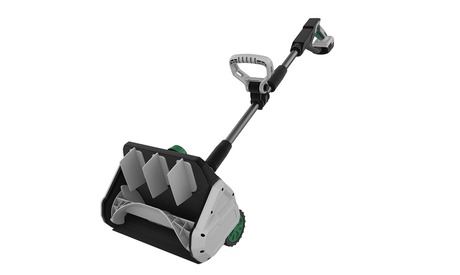
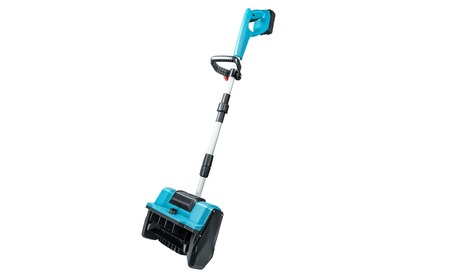
A snow thrower is a professional snow removal device that uses an internal auger structure to shovel, roll up, and throw snow outwards. It belongs to the category of mechanical snow removal tools and is completely different from wind-powered snow blowers.
It works by having a rotating auger contact the ground, drawing snow into the machine and then throwing it directionally from the outlet to a distance. It can handle thicker and more compacted snow than a snow blower, removing snow more thoroughly and efficiently. It is mainly used for daily snow removal in flat areas such as driveways, sidewalks, and yards, and is currently one of the most popular small household snow removal devices.
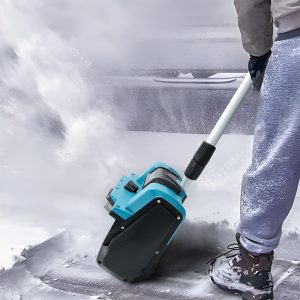
Difference between Cordless Snow Blower VS Snow Thrower
Cordless snow blower and snow thrower may seem similar in function for clearing snow in winter, but they actually differ significantly in several core aspects, including working principles, snow removal capabilities, applicable scenarios, user experience, and functional uses.
Working Principle
Snow blowers rely on motors to drive blades and generate high-speed, strong airflow. The thrust of this airflow directly blows snow to the side or a designated area, without any shoveling mechanism; it’s purely wind-powered. Snow throwers, on the other hand, rely on a high-speed rotating internal auger to shovel up snow from the ground, roll it into the machine, and then throw it directionally to a distance through the snow outlet, completing snow removal entirely through mechanical structures.
Snow Removal Capability
Snow blowers have relatively limited airflow and can only effectively clear thin, dry, loose snow that is generally no more than 2-3 cm thick. Their snow removal efficiency drops significantly when encountering wet snow or slightly thicker snow accumulations. Snow throwers, on the other hand, rely on mechanical structures to operate, allowing them to handle thicker snow accumulations and small amounts of wet snow. They remove snow more thoroughly and efficiently, and can also throw snow to a greater distance, preventing secondary accumulation.
Applicable Scenarios
Snow blowers are compact and mobile, and can be used without a level surface, making them particularly suitable for small, narrow areas such as steps, balconies, corners, and car surfaces. Snow plows are better suited for flat, open areas such as driveways, yards, and sidewalks, as they require the auger to contact the ground for operation and are not suitable for use on steps or uneven surfaces.
Operation and portability
Cordless portable snow blowers are lightweight and can mostly be operated with one hand, requiring minimal effort to push. They are easy for the elderly and women to use, reducing fatigue during extended use, and are space-saving when stored. Snow throwers, on the other hand, are heavier and require both hands to hold them steady and propel them forward. They demand more strength from the operator and are less flexible and portable than wind-powered snow blowers.
Functions and Uses
Snow blowers are multi-purpose tools, used not only for blowing snow in winter but also for blowing away fallen leaves and dust in spring and autumn, making them more efficient. Snow throwers, on the other hand, are specialized snow removal equipment with a more focused function and no additional uses, but they offer more professional snow removal results and are suitable for users whose primary need is snow removal.
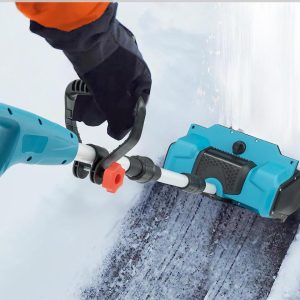
How to Choose Snow Blower or Snow Thrower
When choosing between a snow blower and a snow plow, you don’t need to blindly compare prices or features. Just consider your own snow accumulation, operational needs, budget, and maintenance requirements to quickly make the most suitable decision.
Snow depth and type selection
If your area experiences dry, loose, and light snow in winter, and you only need to clear the surface, a lightweight snow blower will suffice. However, if you frequently encounter moderate snow accumulations, a snow flint and snow agitator will be more practical.
Functional Requirements
If you prioritize winter snow removal and prefer more professional and durable tools, then a dedicated snow blower is more suitable for your needs. If you want a tool that can be used year-round, not only for blowing snow in winter but also for clearing fallen leaves in spring and autumn, and you’re looking for high cost-effectiveness and versatility, a snow blower is a more economical choice.
Budget and Maintenance
If you have a limited budget and prefer a simple tool with minimal maintenance, you can choose a snow blower, which has low operating costs. If you are willing to accept a slightly higher budget and don’t mind simple cleaning and maintenance after use, and are looking for stronger snow removal performance, a snow blower will offer a better long-term user experience.
Conclusion
In summary, there’s no absolute superiority or inferiority between snow blowers and snow throwers in terms of usage; the difference lies in whether they suit the specific usage scenario and needs.
MVM is a professional brand specializing in cordless lithium-ion tools, consistently adhering to a design philosophy of power and reliability to provide every user with a better experience. If you would like to learn more about our products or request customized services, please feel free to contact us. The MVM team will provide you with professional service.